
Confirm the rotation
Read Last update and Next reset. A snapshot close to the reset needs a fresh check before a long route.
Scroll to zoom. Drag the map to move. Select a marker for the item name and icon.
 Loading live mapFetching today's terrain and markers…
OBJECTIVE ROUTE GUIDE
Golden Bing Bong searches are decided by route context. Use the live PEAK map to narrow the current location, match the surrounding terrain, and judge whether the entrance can be reached without sacrificing the climb.
REWARD WITH A ROUTE
A reward marker can look close while the practical entrance sits behind a ridge, below a drop, or beyond a route that the party cannot easily rejoin. Start with the map’s current state and treat the terrain as part of the answer.
Open the relevant biome and read the update time before searching for the marker. Then reduce the map to the layer that supports the objective. Select the point to confirm its label, zoom around it, and identify the large terrain feature that should appear in the game. Golden Bing Bong becomes a route decision when the party can describe both the reward’s location and the path back to the mandatory climb.
The location can be discussed in two stages: “where should we search?” and “should we spend the run getting there?” The first is a map question. The second depends on elevation, hazards, stamina, and the group’s current position. Keeping those stages separate prevents a promising marker from becoming an automatic detour.
A reward route needs a clear handoff between the map and the game. Call the level, the target layer, and the landmark that frames the entrance. Once the party reaches that landmark, stop reading the pin and inspect the actual approach. This keeps the search focused and gives the group a clean reason to abandon the detour when the expected terrain is absent.
The reward question changes as the run changes. Early in a climb, a nearby search may be easy to absorb. Later, the same distance can threaten the required route because the group has less time to recover. Recheck the marker against the current position rather than assuming that a route decision made at spawn still fits after several levels.
Players often search for Golden Bing Bong with a reward-first mindset, yet the strongest route call begins with access. Look for the opening, the space needed to turn around, and the landmark that leads back to the required climb. If any of those pieces is missing, hold the objective. A location becomes useful when the party can reach it and leave it without losing the run.
SEARCH SEQUENCE
A short sequence gives the party enough context to choose the reward without turning the whole run into a search.
Read Last update and Next reset. A snapshot close to the reset needs a fresh check before a long route.
Use the marker with a second feature such as a deep opening, rock boundary, bend, or recognizable structure.
Name the route back to the required climb. If the return cannot be described, hold the detour rather than guessing.
ENTRANCE CONTEXT
Reward searches become safer when the marker is connected to a shape the group can see and remember.
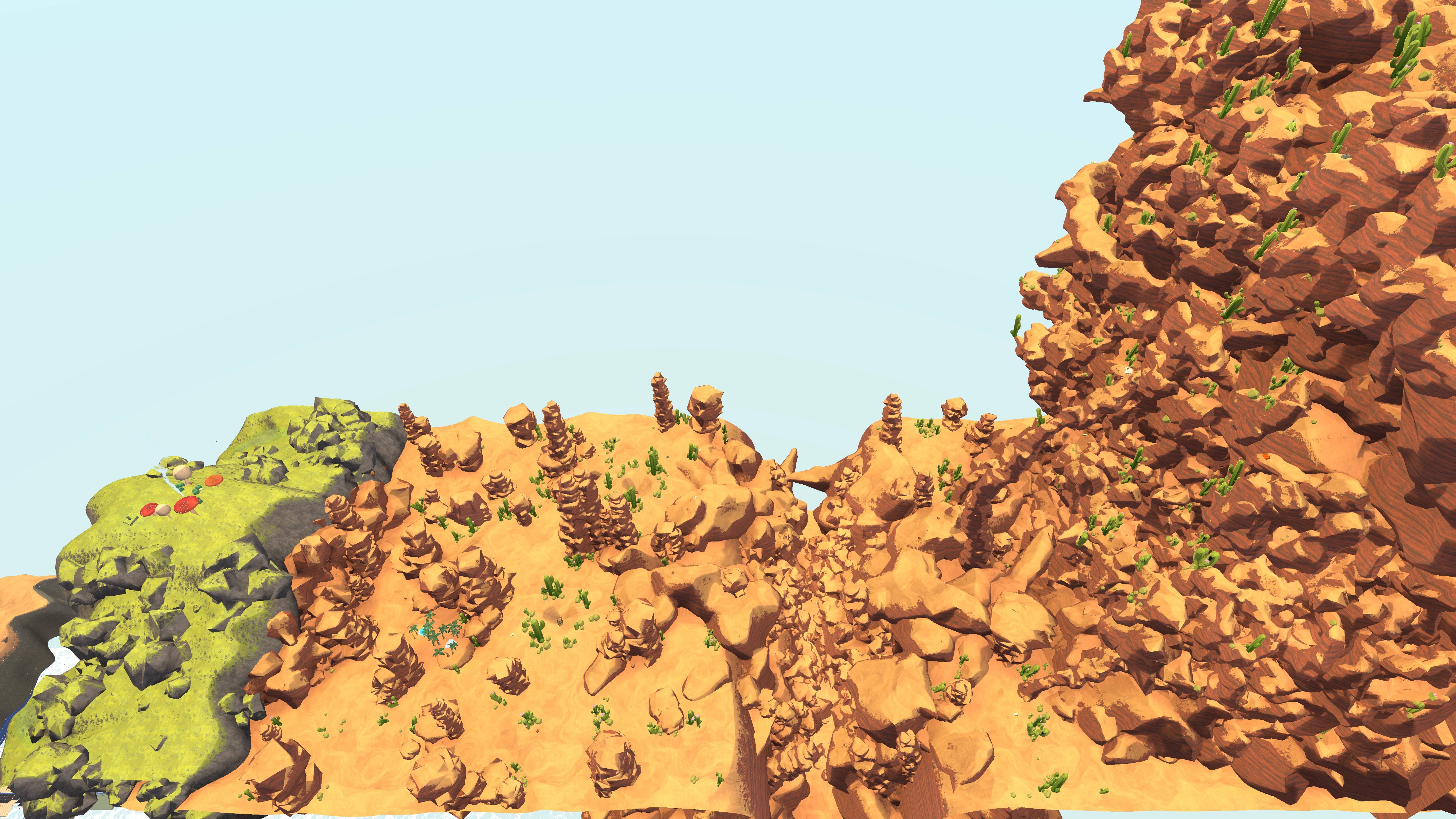
A side angle can make a reward approach easier to discuss when elevation changes hide the return path.
Use the broad image to understand where the objective sits relative to the route. Then inspect the nearest terrain boundary. A deep hole, rock structure, or edge may explain why an entrance feels farther away than the pin suggests. The best reference is large enough to recognize while moving and specific enough to narrow the search.
When players ask where Golden Bing Bong is, they often need an entrance description rather than a coordinate. Give the location in route terms: after a landmark, below a shelf, beyond a bend, or beside the path. The live map supplies the visual evidence for that description.
DETOUR ECONOMICS
A clear stop condition protects the group from spending the run on an uncertain reward route.
Agree on the reason for taking the detour and the point where the group returns. If the terrain matches and the entrance sits near a safe route feature, continue. If the landmark cannot be found, the entrance appears blocked, or the return route drops out of view, stop and return to the climb. The map should reduce uncertainty; it should never pressure the group to continue when the evidence disappears.
This matters most when the objective is optional. A successful route plan includes the choice to leave the reward for another rotation. Check the broader daily map when the target becomes too expensive, and use the Tomb guide when the question shifts from reward location to entrance access.
FILTER THE MAP
Use the layer panel to control what the group sees while it compares the reward with the climb.
Start with the category that contains the reward marker. Select the point so the label and icon confirm the search target.
Keep Belltowers or Tombs visible only when they help identify a recognizable structure on the approach. Hide them when they create noise.
Open a Luggage subtype only when the reward route also serves a collection goal. Otherwise, leave the map focused on the target and terrain.
Keep the required climb in view while inspecting the reward. A fallback landmark lets the group leave the search without losing its position.
ROTATION CHECK
Daily map data is a snapshot. A fresh-looking pin needs a fresh timestamp and a terrain check.
Before the run, compare the current date and time with the map’s Last update. If the game has crossed the daily reset or the snapshot is clearly older than the session, reload and inspect the map again. A missing marker can come from a hidden category, a different biome, or a new rotation. A visible marker can also describe an older arrangement that no longer matches the approach.
Use the map as a narrowing layer between search and movement. It can tell you where to look and what shape to expect. It cannot confirm every door, hazard, or route decision inside the current game state. The player who checks both the timestamp and the terrain has the information needed to adapt.
The most useful result may be a confident no. If the current image does not match the game, if the entrance has no clear approach, or if the route back would cost too much, keep the target for another rotation. A good reward finder protects the climb by making uncertainty visible before the party spends time on it.
When the marker does fit the run, keep the search narrow. Confirm the target, move to the landmark, inspect the entrance, and return to the route. Avoid opening every category just because the reward is interesting. A focused layer makes it easier to see whether a second point is a useful orientation aid or simply another distraction.
The page should still help after the reward has been found. Use the same landmark to guide the return, close the detail preview when it blocks the map, and restore the broad route view before the next move. That final reset prevents a close-up search state from becoming the group’s only sense of direction.
QUICK ANSWERS
Short answers for the decisions that affect today's route, markers, and detours.
Open the relevant biome, enable the target marker layer, select the point, and match it with the surrounding terrain before leaving the main route.
The guide reflects a community-data snapshot. Check the update time and current game terrain before treating a marker as available.
Use the marker with a second landmark, check the active biome and view, and stop if the terrain does not match the snapshot.
Use the Tomb guide when the problem is entrance access. Use this page when the problem is locating and evaluating the reward route.
Yes. Use the map controls or scroll over the canvas, then drag the enlarged map to inspect the approach and return path.